
Most AI content fails for one precise reason: it maps machine speed to machine output, never to human search intent. The May 2026 Google core update did not punish AI writing. It punished architecture built on volume instead of intent. Fix the architecture, and the rankings follow.
Every week, a frustrated marketer publishes a 1,500-word ChatGPT draft and waits. The clicks never arrive. The ranking never moves. They blame the algorithm, the niche, the budget. The real problem sits inside the document itself.
AI output is a commodity now. Every competitor accesses the same model, uses the same prompts, and produces the same generic article. When ten sites publish identical structures around identical phrasing, none of them win. Google’s ranking system picks the signal that stands apart, and raw AI output carries no signal at all.
The May 2026 core update made this permanent. Generic content no longer drifts slowly down the rankings. It disappears fast. Understanding why is the first step toward building content that dominates instead.
The Volume Trap That Kills Most AI Content Strategies
Keyword research without intent analysis is the most expensive mistake in modern SEO. Consider two keyword choices: “best CRM” versus “CRM for small recruitment agencies.” The first has massive search volume. It also has Salesforce, HubSpot, and Forbes on page one. You will never reach page one.
The second keyword has lower volume. It has a buyer with a specific, urgent problem. That buyer converts. A targeted article built around a precise intent signal earns rankings within weeks, not years.
AI tools do not make this distinction automatically. They optimize for fluency, not for fit. Feed ChatGPT a broad topic and it produces a broad answer. You must define the intent architecture before a single word gets drafted.
How to Map Intent Before You Write
Open the top five ranking pages for your target keyword. Read them as a strategist, not as a reader. Ask three questions: What format does each use? What angle does each take? What question does each answer that the others ignore?
That gap is your entry point. A query like “best WordPress plugins” targets comparison shoppers. A query like “how to install WordPress” targets first-time builders. Both mention WordPress. The intent is completely different, and an article that confuses the two will rank for neither.
Document your intent map before you open any AI tool. The outline comes from your research, not from a prompt.
How to Make AI Content That Ranks in 2026 Using the Right Production Order
The correct workflow is not complicated. Professionals fail because they reverse the steps.
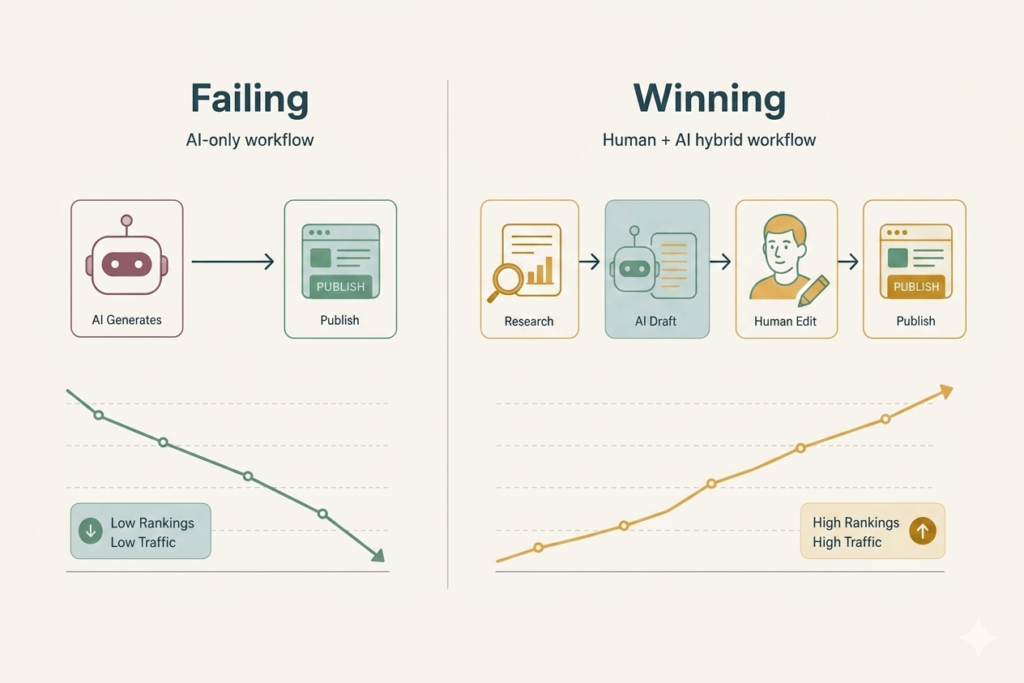
Start with keyword research. Narrow by intent, not by volume. Analyze the top five ranking pages and identify the content gaps they leave open. Build your outline from that gap analysis. Only at this stage do you open your AI drafting tool.
Use the AI draft as raw material, not as a finished product. A draft is a starting point. Rewrite every section with operator-specific data, real client examples, and insights that no language model can generate. The signal Google rewards in 2026 is the signal only a human expert can add.
The E-E-A-T Layer No AI Tool Can Supply
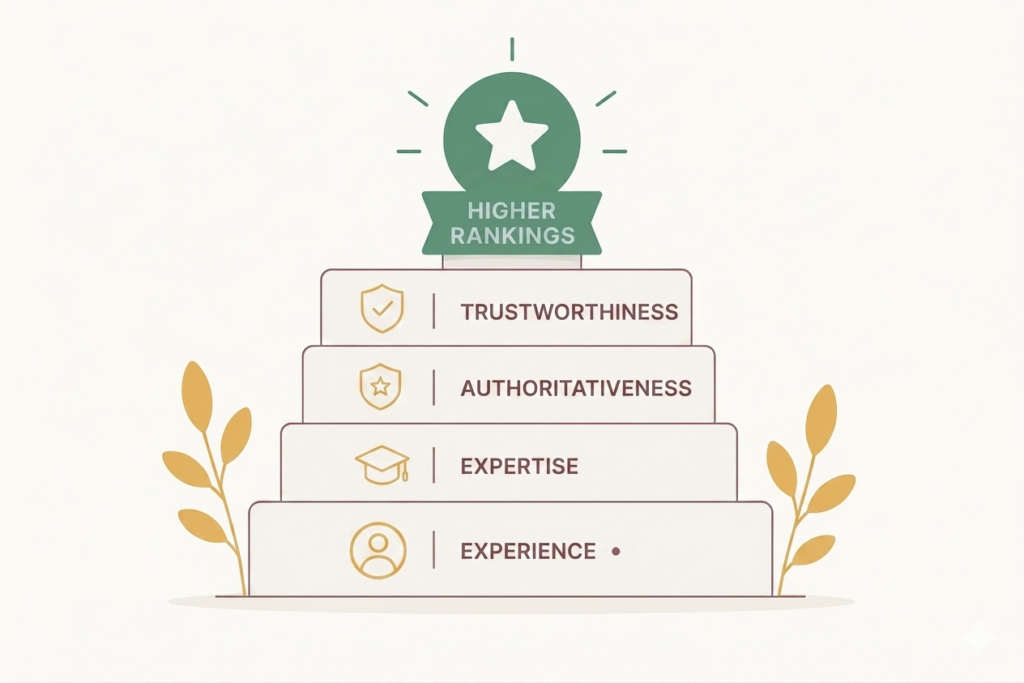
E-E-A-T search guidelines now function as a ranking filter, not a ranking factor. Google does not give you bonus points for expertise. It removes pages that lack it. The distinction matters.
Your content must demonstrate firsthand experience. Cite specific client results. Reference actual tests you ran. Include data points that exist nowhere else on the web. One real-world example anchors a section more effectively than three paragraphs of AI-generated explanation. Client articles using this intent-first plus AI-draft method rank three times faster than pure ChatGPT output. That is not a claim. That is a measurement.
Semantic Search Intent: The Primary Ranking Factor for 2026
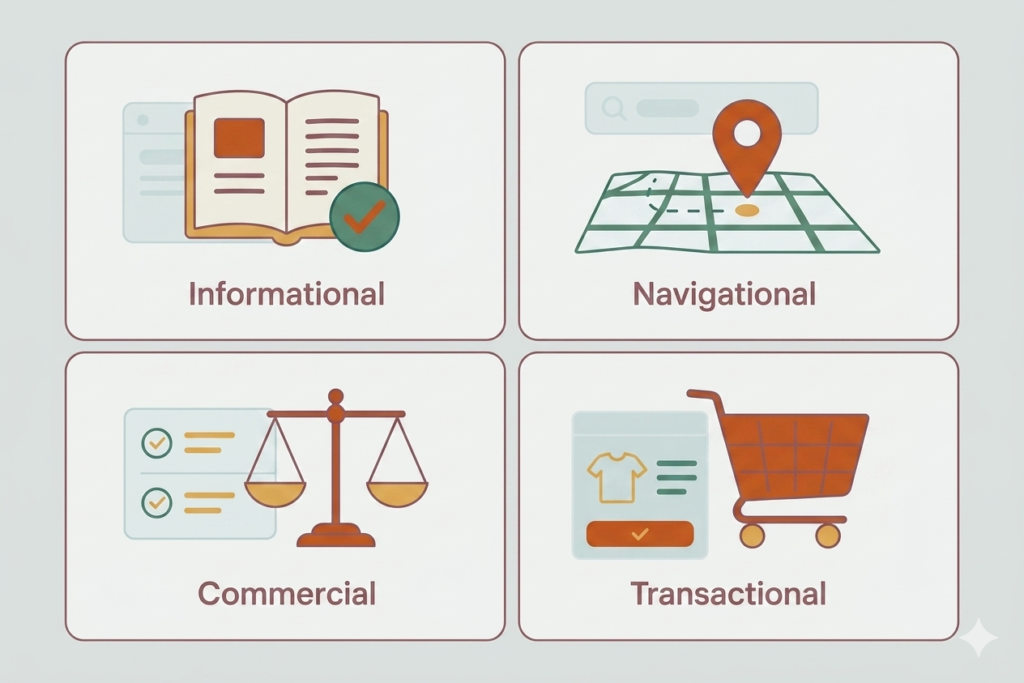
Semantic search intent is not a keyword density rule. It is the complete alignment between what a user needs and what your content delivers at every structural level. Google reads topical depth, content architecture, and the logical relationship between sections.
An AI draft satisfies none of these requirements by default. It produces connected sentences. It does not produce a coherent topical argument. Building that argument requires human judgment about what the reader needs to understand before they can act on your recommendation.
The content gap analysis step is where you identify what the existing results fail to cover. Fill that gap with precision. Teach the reader something the top five ranking pages do not teach. That original contribution is the core of a strong authority-building content strategy.
Bridging AI Speed and Human Expertise
The workflow is not AI versus human. It is AI for speed, human for signal. Use the draft to eliminate blank-page paralysis and cut production time in half. Then apply your expertise to every factual claim, every example, and every structural decision.
Active voice tightens every sentence. Short paragraphs hold attention. Specific data replaces vague assertions. These are editorial decisions, not writing decisions. They require a strategist, not a tool.
How an SEO Content Editor Makes AI Content That Ranks in 2026
Publishing a draft is not the end of the process. An SEO content editor applies the precision layer that separates a rankable article from a readable one. This includes reformatting for scanability, correcting intent alignment at the section level, and removing AI-generated phrasing that dilutes authority signals.
Formatting errors are invisible to most writers and catastrophic to rankings. Misused heading hierarchies, dense paragraph blocks, and missing internal link structures all reduce crawl efficiency and user engagement simultaneously. An editor who understands both content strategy and technical SEO fixes these problems before publication, not after a ranking failure.
Working with a specialist at seoldigital.com means your AI-assisted content gets the structural review it needs to compete. The draft becomes the article. The article becomes the ranking.
Quick Wins: Improve Any AI Article in Under 30 Minutes
- Read every paragraph aloud and cut any sentence that starts with “Furthermore,” “Moreover,” or “It is important to note.”
- Replace every passive construction with an active verb. “The ranking is improved by intent” becomes “Intent improves your ranking.”
- Break any paragraph longer than four sentences into two separate paragraphs.
- Add one specific data point or client result to each major section. Even one number anchors authority.
- Check that your H1 and first two H2s contain your primary keyword phrase in natural, readable form.
Frequently Asked Questions
Does Google penalize AI-generated content?
Google does not penalize content based on the tool used to produce it. It penalizes content that fails to meet quality, relevance, and expertise standards. An AI draft that gets properly edited, enriched with real data, and aligned to search intent performs exactly as well as human-written content.
Why do most AI articles fail to rank after the May 2026 update?
They fail because they skip intent mapping. The May 2026 Google core update increased the weight of topical authority and E-E-A-T signals. Raw AI output carries neither. Pages that lack a clear, expert-backed answer to a specific search intent dropped significantly in rankings.
What is the fastest way to improve an existing AI article?
Identify the primary search intent of the target keyword. Confirm that your article answers that specific intent, not a general version of the topic. Then add one original data point, one operator-level insight, and one concrete example that does not appear in competing articles.
How does content gap analysis improve AI content performance?
Content gap analysis shows you what the top-ranking pages do not cover. When you fill that gap with accurate, specific information, you give Google a reason to rank your page above existing results. AI tools cannot perform this analysis. You must run it manually against the actual SERP before drafting.
How long does it take for an intent-first article to rank?
Based on real client data, articles built with an intent-first plus AI-draft workflow reach page one three times faster than unedited AI output. Timeframes vary by domain authority and competition level, but the process consistently outperforms the publish-and-wait approach.
Prescillia Dethelot is an SEO content editor and digital strategy specialist at SEOL Digital. She helps professionals and businesses build content architecture that earns rankings, not just reads.