
Generic AI content floods the web. It reads fine, but says nothing new. Search engines now detect that gap instantly and downgrade it.
You cannot outpublish competitors anymore. You must out-position them. Authority now depends on precision, relevance, and trusted signals that reinforce your expertise across the web.
What Actually Defines Authority Today
Authority became more than backlinks or domain age. It is a compound signal built from relevance, credibility, and consistency.
Search engines evaluate how well your content answers intent. They also track who references you and in what context. A single mention from a respected source often outweighs dozens of weak links.
That shift changes how small businesses should act. You must stop chasing volume and start engineering trust.
build authority for small businesses includes: The Core Framework
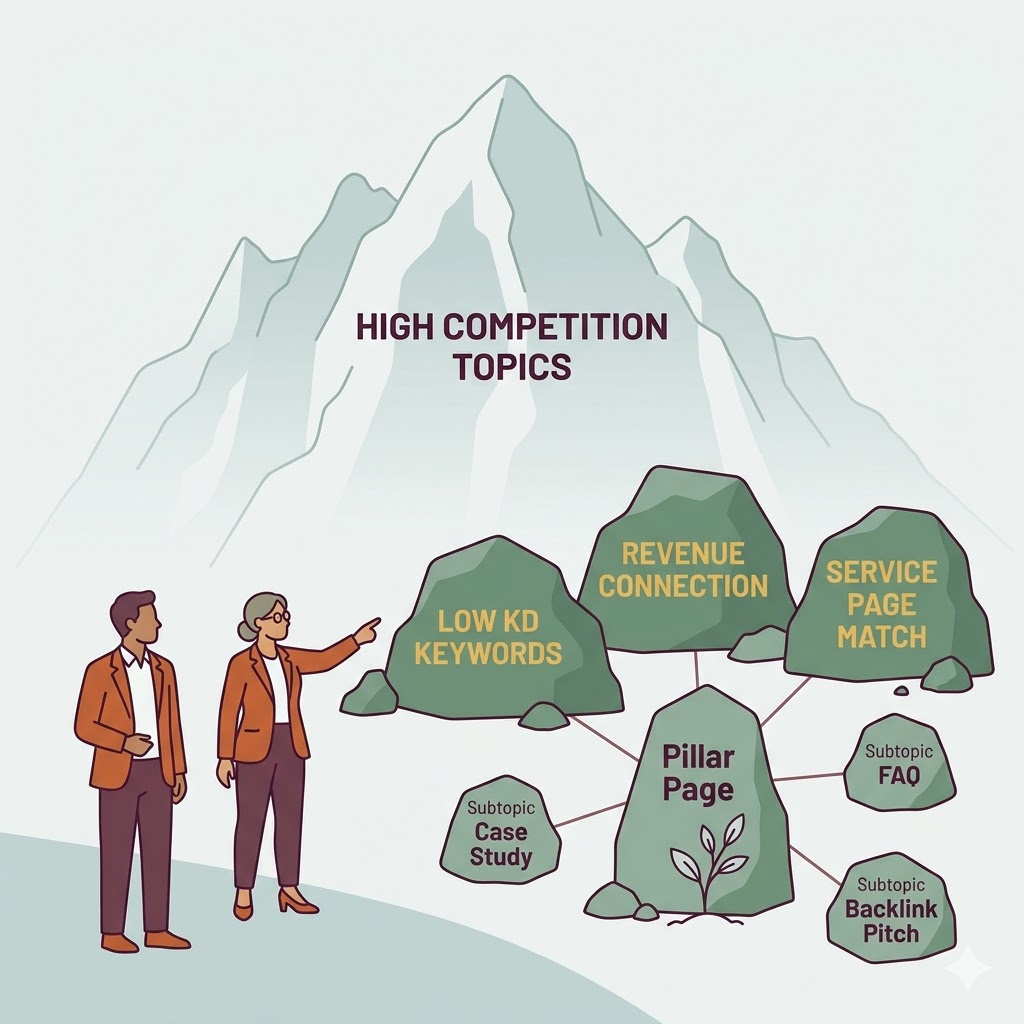
Target, Important traffic, Low-Competition, High-Intent Topics
Start with low keyword difficulty queries. Focus on the questions your audience actually asks.
Use tools to find gaps where strong answers do not exist. Then write content that directly solves the problem in clear language. Avoid fluff and filler.
Example: Instead of “digital marketing tips,” target “how a bakery can increase views with Instagram ads.” That specificity attracts both users and search engines.
Create Content That Earns Citations
Write content that other creators want to reference. That means original insights based on your experience, clear data, or structured explanations.
Your blog post should become a trusted source where your readers want to come back to. When your content gets cited, you gain natural backlinks that signal authority and improve your referencement.
One strong backlink from a relevant, high-authority site can outperform twenty weak ones. Focus on relevance first, then authority.
Build Relationships with other Content Creators
Outreach still works when done correctly and offers value.
Identify authors covering adjacent topics. Share a useful addition, such as data, a case example, or a clarification. If your input improves their content, they will reference you. The same way you propose to reference them back.
This approach, even if it is not the simplest to accomplish, assures you to scale better than cold link requests. It also builds long-term visibility within your niche.
Why Semantic Search Intent Drives Rankings in 2026
Search engines now interpret meaning, not just keywords. They analyze context, relationships, and topical depth.
If your content does not fully satisfy intent, it will not rank. Even if it includes the right keywords.
How to Align With Semantic Intent
Break down each query into layers. Identify what the user wants, what they expect next, and what proof they need to trust the answer.
Then structure your content accordingly:
- Answer the core question at the beginning of the article.
- Expand with supporting details and examples from experience.
- Reinforce with credible references or sourced data.
This layered approach matches how AI models evaluate completeness. It also improves user satisfaction, which feeds back into rankings.
Bridging AI Speed and Human Expertise
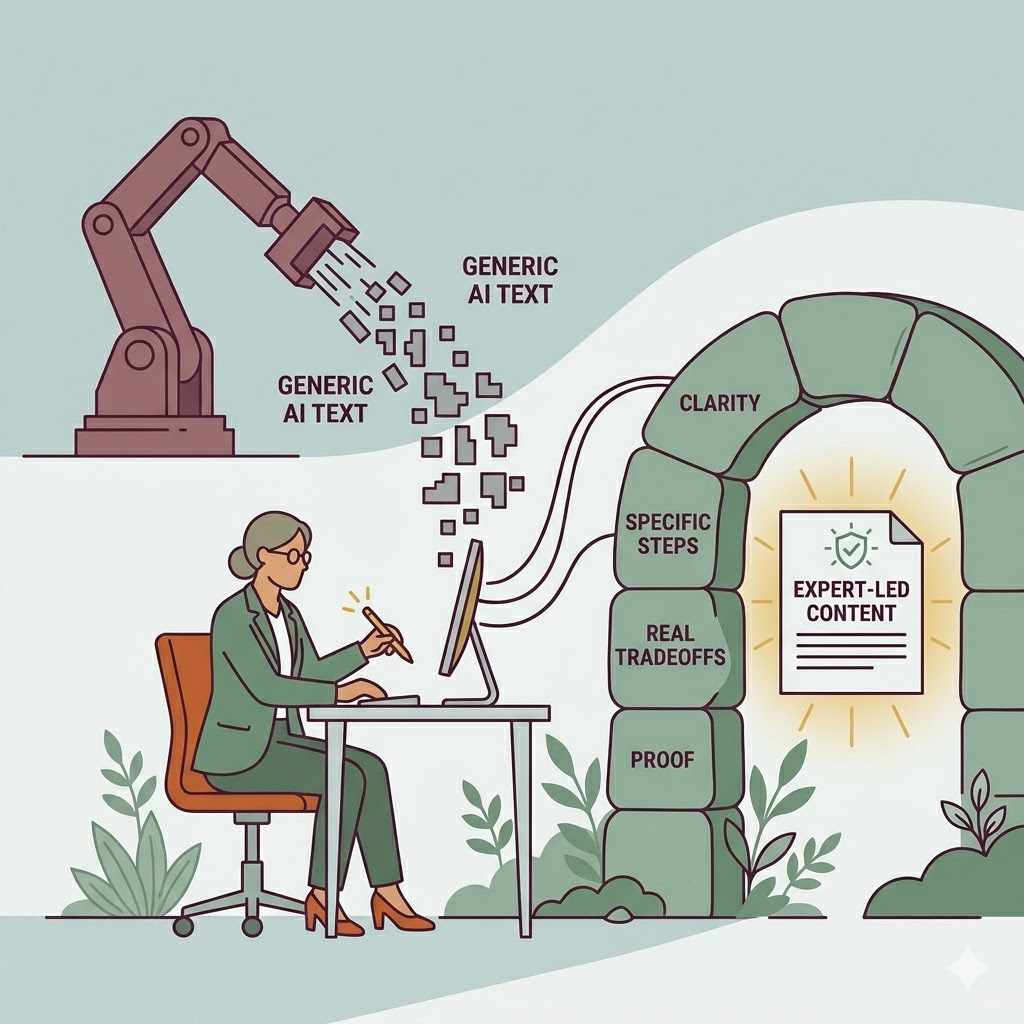
AI can generate content quickly. It cannot validate experience or nuanced judgment.
You must inject real expertise into your content. Use case studies, personal insights, or industry-specific observations. These elements create differentiation that AI alone cannot replicate. This is why working with an editor specialist makes the difference. We put the human back at the heart of communication.
The winning formula combines AI efficiency with human validation. Your validation. Speed gets you visibility. Expertise secures authority.
Technical Precision: The Hidden Authority Multiplier
Many businesses overlook formatting and structure. That mistake costs rankings.
Search engines rely on a clean structure to interpret your content. Poor formatting weakens even strong ideas.
Use clear headings, concise paragraphs, and logical flow. Ensure your schema markup and internal linking support topic relationships.
If this feels complex, work with a SEO editor specialist. They refine structure, eliminate inconsistencies, and align your content with search engine parsing systems.
This step often delivers faster gains than producing more content.
5 Quick Wins to Improve Authority Fast
- Update one existing article with deeper answers and structured headings.
- Add 3to 4 internal links between related posts to reinforce topical authority.
- Reach out to one relevant blog author with a meaningful contribution.
- Replace generic introductions with a direct answer to the main problem.
- Optimize one page for a low difficulty, high intent keyword.
FAQ
How does Google distinguish between AI-generated and expert-led content?
Google evaluates depth, originality, and contextual relevance. Expert content includes unique insights, consistent topical coverage, and credible references that AI-only content often lacks.
Are backlinks still important in 2026?
Yes, but quality and relevance matter far more than quantity. A single authoritative backlink within your niche carries significant weight.
How long does it take to build authority?
You can see early signals within weeks if you target low competition queries. Strong authority typically develops over several months of consistent, strategic publishing.
What type of content builds the most authority?
Content that solves specific problems, includes original insights, and earns citations performs best. Tutorials, case studies, Story Time and data-driven articles lead.
Can small businesses compete with large brands?
Yes, by focusing on niche expertise and semantic precision. Large brands often lack the specificity that smaller businesses can deliver effectively.
If you want, I can audit one of your existing pages and show exactly how to upgrade it for authority and rankings. Contact me and let’s talk about your projects.
Relevant Articles:
How to Make AI Content That Ranks in 2026
What is the difference between SEO Content Editing and Copywriting?